
Benefits of Modular Laboratory Furniture Systems in Modern R&D
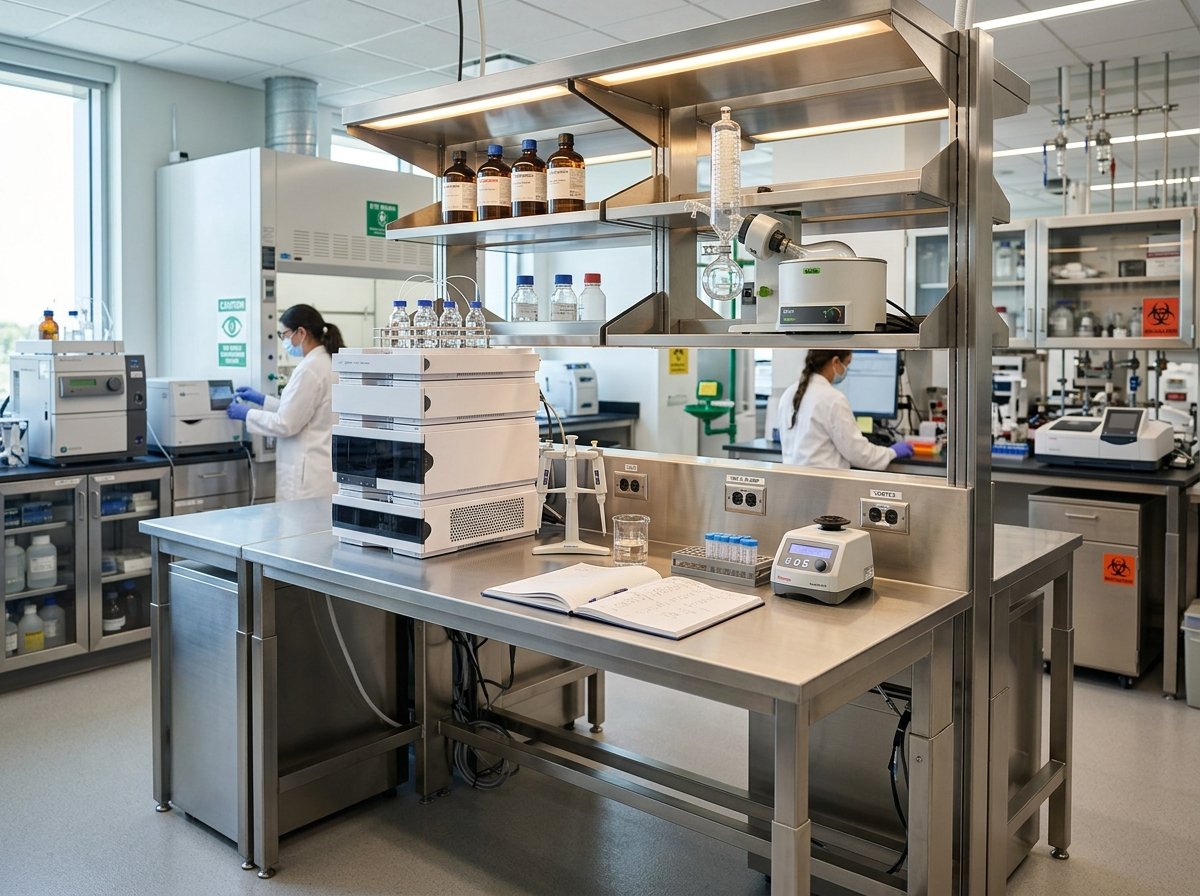
- Modular C-Frame and H-Frame structures accommodate high instrument loads up to 500 kg per linear meter.
- Concealed service raceways simplify gas, vacuum, data, and electrical relocations during lab expansions.
- Ergonomic balance tables featuring independent granite dampening blocks eliminate vibration interference for analytical balances.
- Modular systems reduce facility downtime by up to 60% when reconfiguring analytical work cells.
The Shift from Fixed Casework to Flexible Architecture
Traditional pharmaceutical QC/QA and analytical laboratories were historically built with fixed masonry or welded casework. However, the rapid pace of analytical innovation — with newer HPLC, GC-MS, and automated liquid handlers — requires labs to reconfigure workflows frequently.
Modular furniture systems decouple structural bench supports from storage cabinetry, allowing facilities to reassign floor space in hours rather than weeks.
Structural Load Integrity: C-Frame vs. H-Frame
Himalayan Steel fabricates heavy-gauge cold-rolled and stainless steel C-Frame and H-Frame bench modules. C-Frame configurations offer optimal legroom and under-bench cart maneuverability, while H-Frame structures provide uncompromising stability for heavy analytical machinery.
All frame members are finished with chemical-resistant epoxy powder coating or electro-polished stainless steel, ensuring zero corrosion from solvent spills.
Integrated Service Raceways and Safety Compliance
Quick-connect utility drops for pure nitrogen, laboratory vacuum, potable water, and high-amperage instrument outlets are integrated directly into overhead reagent shelves and under-counter raceways.
This eliminates floor cables, minimizes trip hazards, and complies strictly with OSHA and SEFA-8 laboratory guidelines.
Designing Equipment for Your Facility?
Share your user requirements or cleanroom layout drawings with Himalayan Steel Industries in Baddi. Our metallurgical engineers provide material test certificates (MTC), 3D CAD modeling, and competitive fabrication quotes.
More Engineering Insights
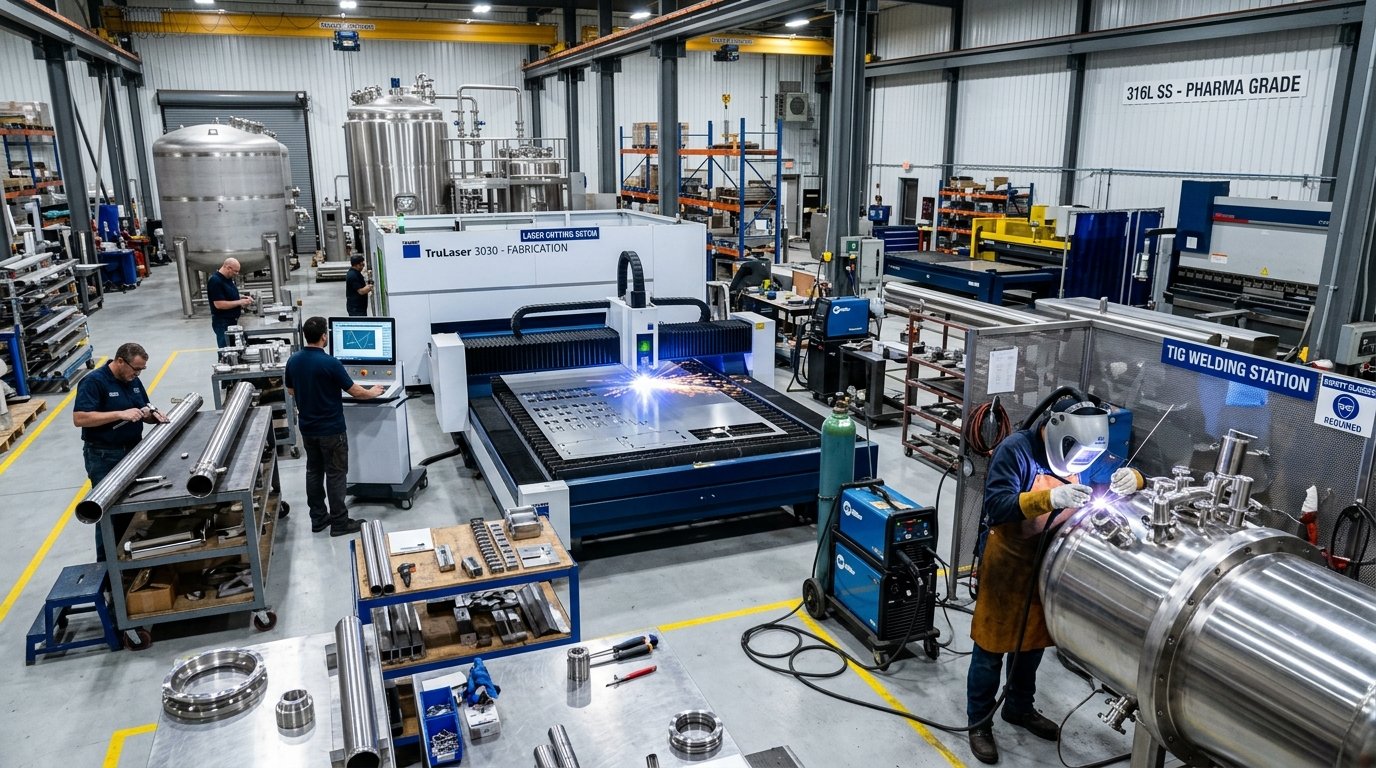
Material Selection in Pharmaceutical Equipment: SS 304 vs SS 316L
Choosing the correct grade of stainless steel is essential for cGMP compliance and corrosion resistance. Learn when to specify SS 316L with molybdenum addition versus SS 304 in pharmaceutical manufacturing lines.
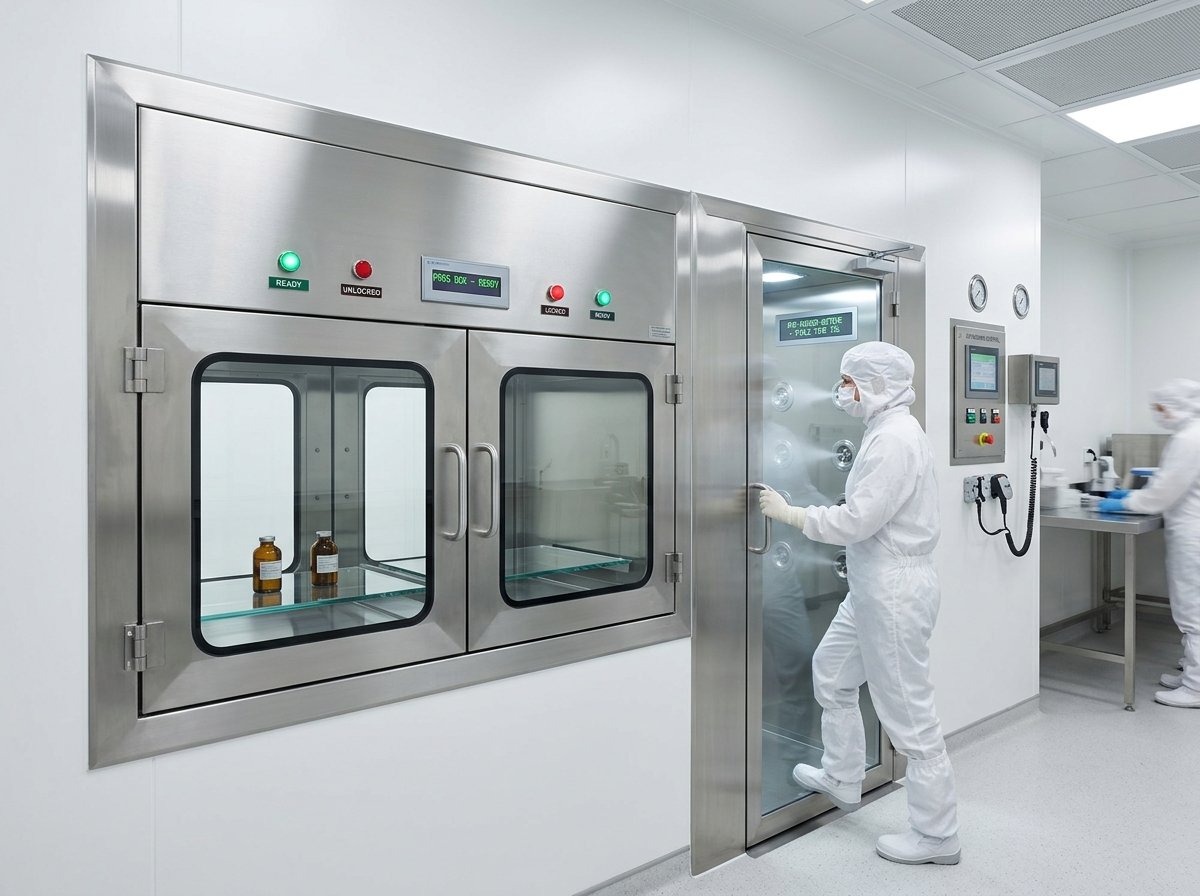
Understanding GMP Requirements for Pass Boxes & Air Showers
A comprehensive engineering guide to ensuring cleanroom transfer equipment interlocks and HEPA filtration meet ISO 14644 standards without compromising pressure cascades.